Skip to content

Various

TinyGS: Getting Back to Listening

TinyGS PolaBase

Back in 2020, I bought a few cheap ESP32 boards to experiment with Drone Remote ID Open Source French Drone Identification. It turns out these boards also include an SX1278 LoRa module at 433 MHz.

Here is the board: TTGO T-BEAM

At the time, Meshtastic wasn't really a thing yet. LoRa at 433 MHz doesn't have particularly long-range, and I didn't have a clear use case anyway…

But then I discovered something much more interesting: TinyGS.

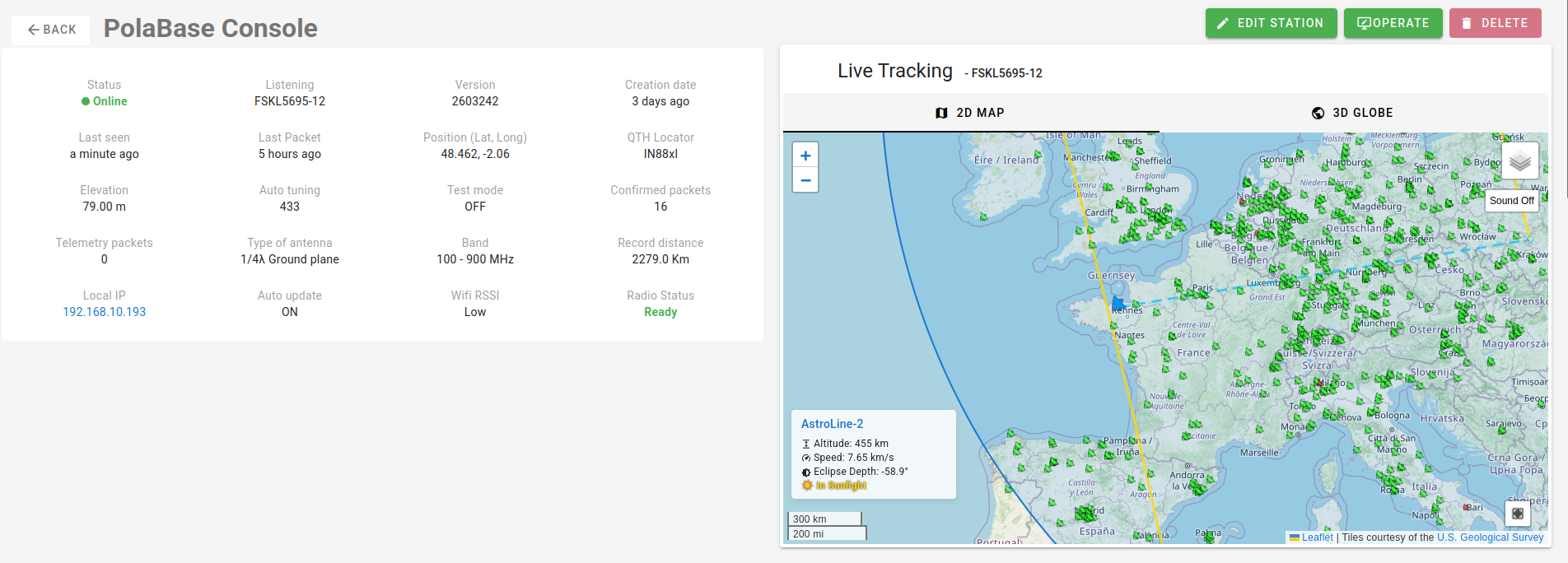
TinyGS is an open network of ground stations distributed around the world, designed to receive telemetry from LoRa satellites, weather probes, and other flying objects using cheap and versatile hardware. And of course, the project is FOSS, so I had to give it a try !

I even opened a PR back then: Github PR100 (still open, unfortunately…)

At that time, I was living in the middle of a large city, and I never managed to receive anything, not with the default antenna, nor with a cheap "5 dBi" advertised one.

Learning ADS-B Technology: A DIY Guide

|602x431

With the application of new regulations all around the world, one noticeable trend is the widespread use of ADS-B (Automatic Dependent Surveillance-Broadcast) detection modules on drones. Prominent companies like DJI have integrated these modules into their fleets, and ArduPilot has been supporting ADS-B integration for years even before DJI, thanks in large part to CubePilot and UAvionics. These small, integrated modules, such as those found in CubeOrange baseboards, are revolutionizing drone safety. In this post, we will delve into the world of ADS-B, exploring how to build your own ADS-B receiver.

Open Source French Drone Identification

Cher·e·s dronistes français, (This news is mostly for french people, you will find english translation at the end of the post)

Vous n'êtes pas sans savoir que l'Arrêté du 27 décembre 2019 définissant les caractéristiques techniques des dispositifs de signalement électronique et lumineux des aéronefs circulant sans personne à bord va rentrer en vigueur prochainement. Cela implique que tous les drones pesant 800 grammes ou plus au décollage doivent être équipés d’un dispositif permettant de signaler électroniquement sa présence.